How Telemedicine Is Improving Healthcare Access in Nigeria
Nigeria experiences a heavy burden of diseases, yet its healthcare facilities are in a critical state. With just one physician for every 2,500 patients, a ratio four times worse than the WHO’s recommended standard. National health expenditure accounts for 4% of GDP, compared with the African average of 7.2%.
Up to 50% of the population resides in rural regions without access to reliable medical services. The maternal mobility ratio stands at a devastating 12 per 100,000 live births, and non-communicable diseases such as hypertension and diabetes are increasing rapidly in communities with no specialist care.
Against this stark backdrop, telemedicine is a clinical lifeline. This article focuses on the practical ways in which telemedicine in Nigeria is already enhancing healthcare access, the clinical areas where it is already having a tangible impact, the platforms that are already working on the ground, and the major obstacles that still need to be overcome.
How Telemedicine Fills Critical Clinical Gaps
There are fewer than 500 cardiologists in Nigeria serving 200 million people. The number of neurologists, oncologists, and psychiatrists is overwhelmingly concentrated in cities like Lagos and Abuja.
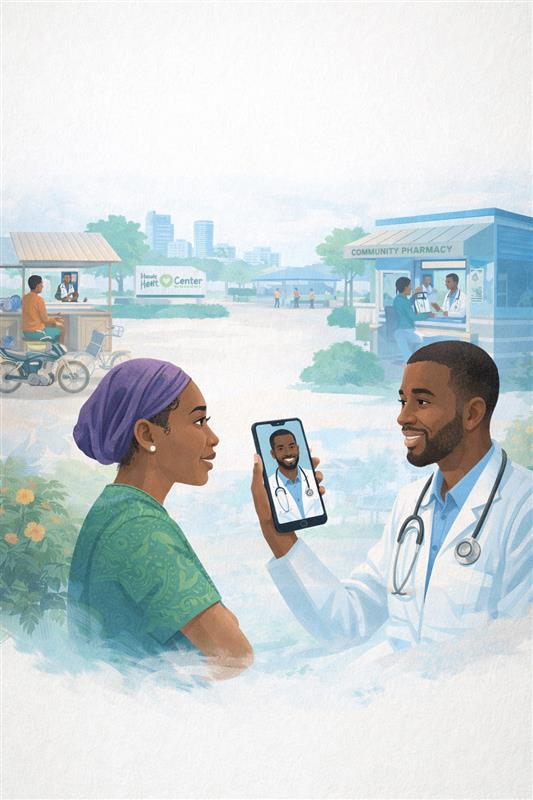
Patients spend days or even weeks waiting to consult a specialist, which can raise serious health concerns. Telemedicine restructures this by enabling real-time virtual consultations between rural health workers and urban specialists, compressing the care interval from weeks to minutes.
According to the Rome Business School Nigeria report, telemedicine has increased access to healthcare in Nigeria by 70%, shortened hospital wait times by 40%, and reduced hospital visits by 40% in pilot communities.
The Action Model of Telemedicine in Anambra State
Anambra State has launched one of Nigeria’s most structured telemedicine challenge programs. The program establishes a telemedicine hub in each of its 21 Local Government Areas, with at least two doctors in each hub who will serve nurses and health officers across all 326 wards via tablet devices.
The program was launched in 2024, and is a direct response to the accelerating emigration of Nigerian doctors—a “brain drain” that has seen nearly 19,000 physicians leave the country in the last two decades.
“Telemedicine has become a great consultation tool. It’s now part of how we keep children vaccinated. Parents rely more on the process when doctors explain it directly through the screen.” Nneka Nwauba, a health officer at the Okpeze Primary Healthcare Centre in Orumba
Clinical Impact of Telemedicine on Specific Diseases
Telemedicine is proving particularly effective in managing chronic conditions like:
Heart Disease and High Blood Pressure
Hypertension impacts the majority of the adult population in Nigeria, but it cannot be managed without regular monitoring and drug dosage adjustments.
Remote patient monitoring through connected BP devices enables clinicians to adjust antihypertensive regimens without requiring physical attendance. This approach can reduce patient medical costs by 30% through remote monitoring and electronic prescriptions.
Mental Health
Nigeria’s mental health burden is one of the most acute and neglected in the world. The country has fewer than 300 practicing psychiatrists for a population of over 200 million, a ratio that makes adequate care for the estimated 60 million Nigerians experiencing a mental health condition. Virtual therapy systems are now accessible to more than 7 million Nigerians in need of mental health services, such as MyMedicalBank, serving 20% of urban mental health patients per day.
Maternal Health and Infectious Disease
Virtual antenatal care, postnatal depression identification, and real-time danger identification are also being implemented to curb the devastating maternal mortality in Nigeria.
Projections suggest prenatal care could reduce maternal deaths by 20% by 2035. For HIV and TB patients, mHealth-based ART adherence monitoring and remote DOTS supervision are helping to maintain clinical continuity for patients who cannot attend clinics consistently.
Studies reviewed in the PLOS Digital Health systematic review show patient willingness to use telemedicine for HIV management ranging from 55.7% to 96.2%.
Telemedicine Being Used on Active Platforms
There are currently more than 12 operational telemedicine startups in Nigeria, with more than 5,000 health-tech employees: key players are:
- Helium Health – EHR integration, teleconsultation, and Ministry of Health disease surveillance.
- CloudClinic – Overcoming urban overcrowding and remote access shortages.
- Clafiya – Chronic disease management training for rural doctors; raised $610,000 in 2023.
- MDaaS Global – Urban medics who hold daily video calls with patients in rural areas.
- Mobihealth – Low-bandwidth consultations specially tailored to Nigerian connectivity.
Some Barriers Facing Telemedicine
According to a 2025 systematic review, the most frequently reported barriers were technical and institutional.
- Power outages: Nigeria produces -4500MW to serve 200 million individuals; more than 90% of the rural population has no access to quality electricity.
- Connectivity failures: Over 70% of rural respondents report inconsistent network access; 40% of initiated telemedicine sessions fail to complete. Broadband penetration sits at 47%, with rural areas severely underrepresented.
- No dedicated regulation: Nigeria lacks a telemedicine Act. The Medical and Dental Practitioners Act 2004 and the Nigeria Data Protection Act 2023 do not adequately address virtual care, informed consent, or health data security, creating a risk environment that exposes 60% of users.
- Low digital literacy: Estimated at only 28% in rural regions versus 65% in cities, limiting the patient base that can effectively engage with telemedicine platforms.
“The program can be a great tool in closing the trust gap that often stands between a child and a life-saving vaccine”.
– Dr Chinonso Collins, a medical doctor based in Awka
Filling In the Cracks with Telemedicine in Nigeria
The health commissioner in Obidike says steps are being taken to scale the program, but rolling out telemedicine across the state also comes with challenges.
“We cannot deny that there are Internet connectivity issues, high data fees, and poor handling of the gadgets by some health workers in our communities. There are also cases of health workers in communities feeling low self-esteem because many patients are increasingly preferring to seek care from doctors. Most people would rather believe a doctor’s diagnosis than a health officer’s,” Obidike said.
Despite these hurdles, the message is clear: by enabling remote consultations, supporting chronic disease management, and connecting patients with specialists, telemedicine is fundamentally expanding the reach of quality healthcare across Nigeria.