
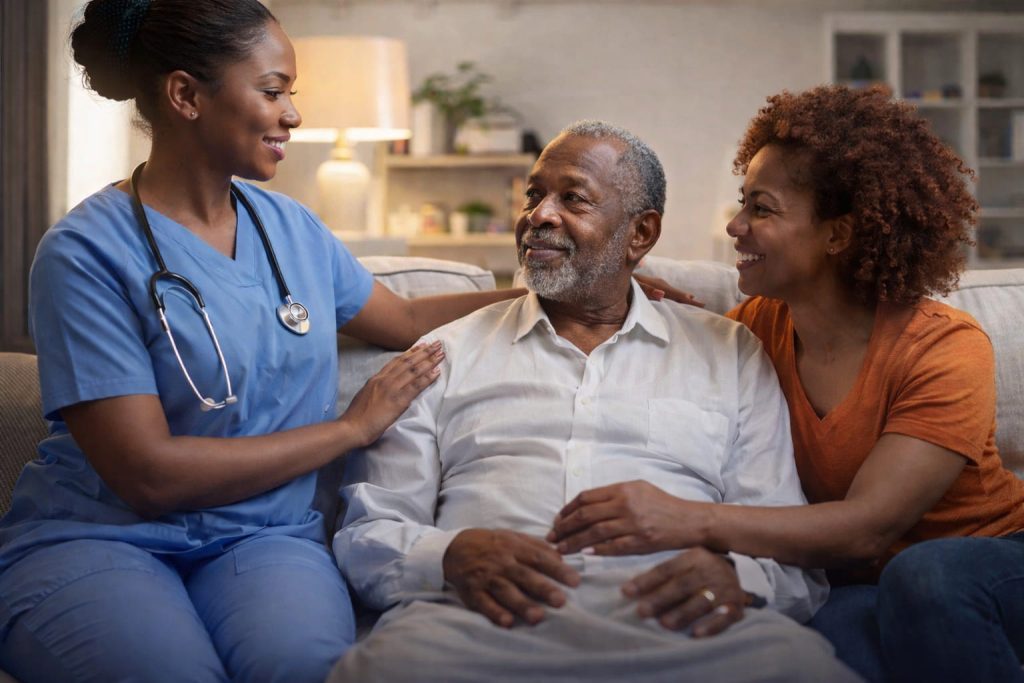
The Benefits of Home Nursing Care for Patients and Families
In Nigeria, patients often wait in hospital queues for the entire day. However, the way Nigerians access their medical care is now evolving. For instance, in emergencies, patients need access to major medical facilities in Lagos and Abuja. Apart from these critical situations, patients prefer to be treated at home.
Data from the World Bank highlights the pressure on the system. It shows a ratio of only 0.4 physicians per 1,000 people, resulting in these long wait times.
Home nursing care involves providing medical care to patients at their homes by certified medical practitioners. Nigerians can avoid the high costs of hospitals by opting for home nursing care. In addition to saving costs, they can receive professional medical care without spending hours in hospital waiting areas.
Healing Better at Home
Recovering in a hospital bed can be mentally draining because of limited visiting hours and constant noise levels. Unlike hospitals, patients at home are surrounded by their personal belongings and often feel better around their loved ones.
The Role of Familiar Nutrition
In Nigeria, nutrition plays a crucial role in a patient’s healing process. A home nurse coordinates with the patient’s family to ensure the patient receives nutritious and fresh meals that meet their nutritional needs.
Whether it is unripe plantain porridge or pepper soup, eating familiar food makes recovery feel more natural. Many patients find recovery at home to be less stressful.
Staying Safe from Hospital Germs
The spread of infections is a major threat in hospitals with high patient turnover and limited space. In most health centers in Nigeria, emergency rooms are often crowded, which increases the risk of infections.
Following National Safety Standards
According to the Nigeria Centre for Disease Control (NCDC), good hygiene is vital in controlling infections. This is particularly critical in shared facilities with a larger number of people.
A patient under care at home is in a clean and controlled environment. Since the nurse is dedicated to a single patient, the risk of hospital-acquired infections is significantly reduced. This is critical for elderly patients who require extreme care for their medical lines.
The Power of Dedicated One-on-One Attention
In a standard hospital, a single nurse might be responsible for dozens of patients at the same time. This heavy workload often limits their interaction with each person to quick medication rounds and brief check-ins.
Early Detection of Health Changes
A dedicated professional is important for quick recovery. Constant monitoring and observation help the nurse notice even small changes early. Having a professional on hand ensures quality care throughout the day.
Improved Medication Management
Another important advantage of this method is improved medication management. For Nigerians, it is usually hard to keep up with various medication schedules for conditions such as hypertension and diabetes.
According to the World Health Organization (WHO), consistent management is key to reducing health risks. A home nurse provides regular doses, which prevent life-threatening complications.
Supporting the Family Support System
Traditionally, in Nigerian culture, it is the responsibility of family members, especially women, to take care of a sick person. We are currently in a generation where many are caught in a sandwich situation, where women have to raise children and care for aging parents simultaneously.
Reducing Caregiver Burnout
Due to this extra responsibility, an individual faces physical exhaustion and stress. Hiring a professional nurse to assist gives relief to the entire family. Rather than spending nights attending to a medical drip, family members can focus on emotional support rather than complex medical tasks.
Saving Money Without Cutting Corners
While home nursing is a professional service, it is often more economical than a long hospital stay. When you consider the hidden costs, staying at home is the better financial choice for many families.
Eliminating Hidden Logistics Costs
Consider the expense of transporting a frail patient through heavy traffic for every follow-up appointment. Families also spend significantly on daily logistics, such as transporting meals to a hospital ward.
The loss of income when a family member stops working to stay at a bedside can be financially devastating. Home care allows family members to return to work while knowing their loved one is in safe hands.
Honoring Our Faith and Traditions
In Nigeria, the spiritual well-being and community support play an integral role in the healing process. It may be challenging for an individual to observe daily prayers or have spiritual visitors in a hospital. With home care services, there is an opportunity to create a flexible schedule to meet the patient’s spiritual needs.
Cultural Dignity and Community
The strictness of a medical facility is often at odds with patients’ strong traditions. At home, a patient’s dignity and cultural beliefs are totally respected by their caregivers.
Maintaining cultural links is important for the patient’s mental well-being and satisfaction. This is often considered to be the best medicine for a patient’s morale.
Knowing When to Choose Home Care
Although emergencies, such as chest pain, require immediate treatment in a hospital setting, home nursing is the preferred option when it comes to rehabilitation.
It is a perfect solution when it comes to wound care after surgery or when a patient is suffering from long-term illnesses, such as high blood pressure. Patients with long-term illnesses receive professional help in their own environment.
These services ensure that professional help is available exactly where the patient is most comfortable. A home nurse may provide specialized treatment when a patient is recovering from a stroke or undergoing physical therapy.
A Smarter Path to Recovery
Home nursing care is filling gaps in Nigeria’s healthcare system with top-notch services. It is taking the burden off hospitals that are often too busy to provide quality care. It provides patients with the intimacy they crave but cannot get in a crowded hospital.
Families who choose home nursing care are investing in a safe and dignified way to care for their loved ones.